Monday, 30 May 2016

The 'Euromyth' of Cucumber curvature.

Bonsoir (French), dobra večer (Croatian), Kalispera (Greek)… Good evening Europe, London calling. 

No, that wasn’t my attempt of showing off how nifty I am (with the help of an online translator to make sure everything makes sense!) 

War is coming. Apples will be harmed. Celery will be used as artillery. The less said about the state of tomatoes, the better. 

If you have been living under a rock for the past few months in British media, the UK will be holding a referendum in the coming weeks on whether or not we should remain a part of the European Union (EU) or leave - which will take place on June 23rd.

A map of the economic and political ties between European states

Already there has been be lots of discussion, debates, scaremongering, dare I say propaganda of ‘factual fiction’ on lots of issues that surround this bubbling issue. I think it would be just to say the core of all of these issues are pinned down by the cucumber. Perhaps a banana at a push.

That’s right. The mighty cucumber. The plant that is added to a salad, served as a refreshing snack or pickled with other fruit/veg, herbs and spices. It doesn’t have a great deal of flavour and compared to other popular fruits or vegetables it doesn’t offer much in the way of nutrition either. Some have a super-subtle sweetness, not unlike a melon. Others have a sense of bitterness about them as a result of the compound cucurbitacin. Most raw cucumbers are over 90% water.
As with any plant there are many different varieties and forms, but for the purposes of this blog entry I am exclusively referring to the ones you would commonly find in a supermarket, greengrocers or fruit and veg stall. From my brief research I believe the variety is a ‘Green Tasty’ - though I could be totally wrong. Though there are many variants and strains that have common characteristics, as with any plant, they come in all shapes and sizes. 

The dichotomy of taste perfectly reflects the ‘in’/‘out’ campaigns that we will all be subjected to for the next few weeks. 

This man won't hold any prisoners if you don't vote
The media took vegetable body positivity (if there ever was such a thing!) to a whole new level a few while back where rumours and articles of the EU banning any fruit or vegetable that did not conform to a set specification would not be allowed to be sold. 

This was consequently backed up by EU commissioners, with Commission Regulation (EC) 2257/94 which states bananas must be “free from malformation or abnormal curvature”. There is no guidance as to what is to be interpreted as ‘abnormal curvature’, which led to inflammatory arguments from the media. These claims were completely blown out of proportion, but still remains into the mindset of the public to this day with some journalists making the point that the "most famous Euromyth of them all" is in fact straight bananas. 

This contrasts from the case based on cucumbers (Commission Regulation (EEC) No 1677/88) where class I and ‘Extra class’ cucumbers are permitted to have a 10mm per 10cm bend. Class II cucumbers can bend twice as much. 

I should highlight that despite every piece of EU law or legislation being translated into every language of  the culture of the general public seems to be somewhat dependant on being apathetic when it comes to the political sphere. 

Though cucumbers are used in cosmetic products and home remedies for it’s naturally soothing properties, there aren’t many products that you can buy that are flavoured with cucumber or you buy primarily because it contains cucumber. In one sense, it is a rather trivial addition to our plates. Similarly, while this ‘euromyth’ I have referred to above is just a trivial creation of the British media it will be used as a weapon for leaving the EU. Dare I say it may even be possibly viewed as equally crucial as immigration or benefit breaks. Well, we will see about that anyway. It represents a mainland European challenge to our parliamentary supremacy and authority that we once held as an arguable world-leader in the Victorian age… yet it is artifice.

In the world of heated bureaucracy, political customs and systems the average human population too often are left out to get cold. Much like that poor dollop of sad, stagnant tinned mushy peas on the side sometimes served with glorious and lovingly made fish and chips from scratch. If you was wondering, yes, I am rather hungry writing this! 

Therefore I predict, for better or for worse, that food will be used as a language translator between the world of politic and the greater people. Economic plans or the intricate details of the core issues such as the ‘Free Movement of Goods’ or ‘Free Movement of Persons’ turned into much more domestic analogies or comparisons. 

By transposing all of this into a form people can understand, it can be used as a political weapon. Following this logic and without bigging it more - it is essentially Excalibur to the ‘question’ of European membership. 

However, as a result this poses the risk of conflation, as complex issues are collapsed into a simplistic comparison. As I said earlier, it is rare you buy a product because it contains cucumber itself. You buy it in addition with lettuce, tomatoes perhaps even yogurt. Cucumbers need context to work, much like you need the details behind the headlines to see things for what they are. 


All of this talk about the UK’s relationship with Europe and I’ve just discovered that the origins of cucumbers are thought to be South Asia. Oh sweet, sweet irony. 


Gourd for thought*?


*Come on, I needed at least one shoddy pun to lighten up this potentially very serious issue!

For a much more light-hearted visual interpretation of this blog, I have found this entertaining clip from a cartoon my sister used to watch. Readers, you can decide whether or not the characters flinging fruit/veg is either 'remain' or 'leave':


References:

https://upload.wikimedia.org/wikipedia/commons/thumb/1/1a/Supranational_European_Bodies-en.svg/600px-Supranational_European_Bodies-en.svg.png accessed 30/05/16

https://www.youtube.com/watch?v=kBfOOmBnfH0 accessed 30/05/16

http://i.imgur.com/72vNIsS.jpg accessed 30/05/16

https://twitter.com/BBCNews/status/737399821615681537 accessed 30/05/16 

Monday, 18 January 2016

The addiction of consumption

Without too much thought, food is one of the basic needs of life. We need it to sustain our bodies to develop and grow and maintain our strength.

If we go without food, we become irate and most of our functioning decreases. Going without food for too long our body goes into starvation, where it kind of eats itself in order to sustain itself. I suppose if you take this on its logical face value, we are in one sense addicted to consuming food both physically and cognitively.

Up until this point, I have also pretty much kept within the boundaries of our relationship with food, its meanings that we attribute to it. Today I will look at food’s relationship with humanity, or rather dark substitutes that, sadly, many consider as routine as ‘food’.


‘Weak and Powerless’ by A Perfect Circle is an interesting song with an even more harrowing music video. In fact, the album to which this song is from The Thirteenth Step (which ironically only has 12 songs in its track listing!) is predominantly focused on the different perspectives, dimensions and consequential recovery of drug addiction.

At no point is food (human food at the very least) shown within the music video, and the only overt reference to food in the lyrics is simply the word ‘feed’ and ‘ravenous’. However, the multiplicity of symbols, allusions and slightly harrowing imagery show the dangers of consuming the wrong products - in this case hard drugs.

A woman with long blonde hair, naked, standing up. The camera edges closer and it becomes seemingly apparent that something is not quire right. Focus is placed on her navel, which instead of a belly button there appears to be this gross, almost burnt looking hole (much unlike some of the graphic anti-smoking campaigns and adverts). It isn’t clear to me whether the intended effect of this is to make it look similar to a black hole, that is commonly understood to have such a poignant gravitational pull even light (a cliche symbol for happiness and life?) cannot escape it OR this is one of the few examples of necrosis in a music video.

I digress.

The initial lyric takes no prisoners to immediately throw the audience into the dark depths to which the song is based on. Using a simple metaphor, “tilling my own grave to keep me level” the speaker outlines the conflict of the entire song - doing drugs to make yourself feel better, however it is bringing him closer to death. It’s matter-of-fact tone directly correlates consumption with decay: the antithesis of what consumption is designed for (see above).

The chorus carries this reading even further:


Desperate and ravenous
So weak and powerless
Over you

Only three lines, the speaker clearly defines the relationship of enslavement. Though subtle, the repetition of the word ‘and’ demonstrates a deeper level of addiction, as the speaker is unable to even form sentences without using a different conjunction or alternative to fuse the clauses together. The first two lines have a similar amount of syllables. By comparison, the final line feels disjointed, which can easily be reflective of the incoherence that substance abuse has led the speaker to.

"Someone feed the monkey while I dig in search of China
White as Dracula as I approach the bottom"

Feed the monkey is an idiom for a serious problem that you cannot forget. A much more sporadic reading into this line conjures an image of organ grinder… although what that has to do with anything I don’t quite know. Meanwhile, ‘dig in search of China’ is an interesting phrase. While ‘China’ is an allusion to opium, if the phrase is taken literally it seems absolutely ridiculous. Somebody digging to find China, picture that for a second. Madness. It is this nonsensical logic that masterfully maps out the mind of an addict, as rational thought is abandoned in order to ensure the next fix.

Intertextuality is used as the speaker refers to one of the most famous Victorian Gothic fiction novels: Bram Stoker’s Dracula. The effect of this technique immediately evokes connotations of horror, disgust and the inhuman as the ‘white’ ‘China’ again recalls the motif of the grave earlier seen in the initial line.

It is during the second chorus that clusters of Amblypygi appear. If you are not a fan of their general appearance - do not worry. I have a newfound fear/loathing for Amblypygi. Horrifying demonic looking creatures. I hate them. I suppose that is the exact purpose in this video.

Amblypygi - horrific looking creatures. Nightmare fuel. 


The more observant of you may notice that the size of the animal that is thrown into the hole gets progressively bigger as the video continues. A lizard, small snake, iguana-based creature and finally a massive python. Each time without fail the insects shred the flesh of the creature and devour it almost immediately… as the hole in the woman’s stomach grows larger and larger. Towards the end of the video (2:41-2:42) the hole incases the entirety of the woman’s body, as what looks like a field of gravity drifts into the cavity that has now formed.

The video, sadly, ends with the creatures leaving the leftover pieces of animal carcass into an imperfect, broken symbol - the symbol of the group. This insignia flashes in the woman’s eyes and in a daze falls into a pit. As an audience we do not find out her fate… but I think it is pretty obvious what this represents.

References:

https://upload.wikimedia.org/wikipedia/commons/0/0b/AmblypygiDorsal.jpg - accessed 21/02/16

Friday, 11 December 2015

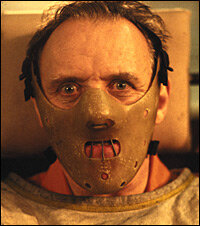
You are what you eat... Ouch that's my face!

It may just be me, but I can't help but notice a troubling and slightly bizarre trend that seems to be entering our culinary lives without any form of protest or eyebrows being raised.

Forget salted caramel, chipotle added to anything and everything,  meats that are 'pulled' in some way or another (all of which I have embraced with loving arms!) or even stuffing pizzas with hot dogs or individual mini-burgers (which still horrifies me) - the latest trend before the year is up is... drumroll, very exciting....

Self-consumption/cannibalism?

Oh. Ah. Ew?

You may think I've gone a little mad, to which I retort 'have you read any of my prior entries?!?'

Earlier in the week I watched an advert on tv in absolute horror. The basic premise was instead of giving your loved ones a "boring" present for Christmas, you can instead buy them some unique marshmallows with your face on it to remember you by. Because obviously that is a better alternative to some dodgy socks. Initially I thought the whole idea of printing a photo on a marshmallow was pretty cool and an awesome show of how the up and coming printing technology is feeding itself into mainstream society...  but then it dawned on me - I would literally be eating a picture of my face.  The fact the company even go out to describe the marshmallows as 'multi-sensory' brings a slightly sour taste to my mouth.
These puns... much like your face is alarmingly easy to get my teeth into!
The next day I came across a BBC article about a company that will print a 3D, chocolate version of a customer's head - all ready for eating.

Perhaps there is something more to these chocolate lollipops. I'm sure if you took a psychoanalytic approach to these patterns I have picked up you could really make something out of this trend I seemed to have picked up. 

The chocolate could quite easily act as a metaphoric representation of our anxieties/insecurities that, as part of a comfort-eating binge, we are able to rationalise and take full dominating (albeit sometimes temporary!) control of through the act of eating. Nothing particularly new there, I've just defined my interpretation of comfort eating - a term which has had a lot of use in the last decade or so. 

However, the addition of a face to these sweet treats add a slightly more interesting dimension. The connection between the act of eating and issue resolution is one becomes somewhat ironic, as you are quite literally 'eating your problems'. Bit of a headache? Gnaw on your temple. Feel a little tired? Have a good ole' nibble of an ear see if that perks you up. Delicious! 

To me anyway it just feels all a tad perverse and rather amusing. 


Maybe it is the other side of the spectrum, where in this modern society dominated by selfies and the surge of body positivity that has struck a chord with many of my generation, the modern ego has become so expansive we now feel the need to create a consumable duplicate of
ourselves. Bearing this in mind with the context of where we are in the year, with Christmas and the festive spirit and excess and bingo you have yourself a marketable USP to create a start-up business.


Now comes in fleshy pink for that human authenticity!
My final anecdotal evidence comes through social media today, which was the inspiration for adding this to my poor neglected food blog. It was a friends birthday earlier in the week, this morning she said thank you for the messages and uploaded a picture of one of her presents: a  popular branded chocolate-based confectionary... wish her face printed on some of them. Pretty cool... but equally a tad creepy?


Unlike the marshmallows where you are chomping on your friends frontal lobe, you are having a munch on your own mouth. WHAT? 
Without realising, these treats sort of enter the territory of Vorarephilia (which comes from the Greek "vorare" - to "swallow" or "devour" and philia  or "love") which again adds a strange twist to a Christmas present.

As I said at the start it may well just be my brain whirring into overdrive, but please do let me know of any more examples or interpretations! 

References 
http://media.npr.org/programs/watc/features/2008/apr/hannibal_200s-74c176c3ebda22a9540e843b01667a26a5a6bac5-s300-c85.jpg (accessed 11/12/15)
http://www.bbc.co.uk/news/business-34963592 (accessed 11/12/15) 

Thursday, 9 July 2015

Forget the fries - 'do you want coupons with that?'


It’s been quite a while since I last made a post which probably has too many shockingly embarrassing typos and grammatical errors...

Hello!

Apologies for the delay, turns out doing a law conversion course, a part-time job and general life doesn’t allow as much time to write entries as I foresaw. The positive is that I have been stockpiling ideas since September. So many I’m not actually sure how to approach any of them or in what logical order to try and research, write and upload them. What I do know for sure though is I won’t be looking at just literary texts or materials, but a lot more variety of mediums alongside literary or other food-based texts I’ve gathered. Hopefully be a lot more of a dynamic and dare I say interactive set of blog entries!

So, on the topic of stockpiling – this post will be about coupons, vouchers and the undermining of the food industry. Baptism of fire to get back into things, right?

I think it would be a fair generalisation we all love a bargain. Whether it be a student discount of all manner of foodstuffs (lord knows my sweet tooth was shamefully satiated with the free ‘ice-cream’* that came with any McDonald’s meal* and my ole’ faithful student ID card), buy one pizza* get one free (useful for missions in the library with my friends until 9am desperately trying to finish an assignment) or meal deals at restaurants that make eating out a much more feasible option. Simply put discounts and offers are a godsend.

*I fully realise these foods are not the healthiest, but I have selected these foods for good reason as hopefully will be explained in the next blog entry. While at university I actually always made sure I had a pretty balanced diet and couldn’t cope without a few fruit or veg every day!

However, is there a stage to which this all goes too far?

The answer to that question, I feel, can be answered in three words: American reality television or to be more precise using just two words - Extreme Couponing.

Sometimes in life you need trash daytime TV. Everyone knows it but nobody says it. I’ve watched many an episode of EC in bemusement at how much these people save, often exclaiming to myself ‘AMERICA HOW DO YOU WORK THIS SYSTEM MAKES NO SENSE’. 
This isn’t a feeble buy one get one free or free blob of frozen... stuff. Oh how these coupon collectors would mock me. No, these are the people that have a retail price of $2000 for a 12hr shopping trip, to come home paying less than $10 if that.

The show always shows the stockpile that these people have collected over the months/years. One woman in particular had a stockpile worth around $33,000, which was stored in a purpose built barn, which is also INSURED for its contents. Madness. Obviously not all of the items were food, but a lot of it was. Nonetheless, at the rate these people are going by consistently going coupon shopping and topping up their stockpiles – there is no way on earth they will ever run out of, well, anything. It begs the question why? How?

From what I gather, inserts from magazines, local papers, flyer's etc. are the source of coupons, which can either be from the manufacturer of the product itself, or the store in question, or both. If the latter a coupon is effectively ‘doubled’ – making couponing a numbers game with highly lucrative consequences. Now any sane reader must be thinking ‘this is a good thing what is he on about?’ and you would have a good point. I would retort that question with eventual economic collapse of the industry as we know it.


By watching this show, you sit in amazement as the programme impliedly expresses to you how easy couponing can be if you are savvy enough. By advertising and effectively normalising dumpster diving to find that extra coupon essential for an extra bargain the show may as well be saying‘you can do this too if you coupon like us’ is subliminally fed (pun intended) to the brains of viewers.


Using the same numbers game that these coupon royalty often use, if a shop purchases say 1000 toothbrushes or cans of a popular fizzy drink at a discounted trade bulk rate and they are essentially giving 100 or 200 away for free, they would be at a loss. Similarly, if everyone who went to this hypothetical shop followed the implied message from the show which I have identified above, these stores would rapidly be losing money and consequently go out of business. I would be interested to know if any store has fell foul to a ‘discount’ for customers. By losing out on what must already be relatively tight profit margins as it is it makes a mockery of the system (whether you consider that to be the food and consumer industry or capitalism is up for you to decide!)

The broadcaster that make this show, TLC have even gone so far as to make an ‘all-stars’ version of the show where people who have been featured compete for the highest retail saving. See the video below to see how well they fare...


The first episode I watched left me with joy and euphoria for these people who can work the system and get the majority of a ginormous shop for free, only actually paying a minuscule percentage instead.

However after watching a second and third episode respectively a wave of unease fell over me. By getting such a sheer volume of stuff for free or virtually nothing food no longer is the source of nutrition or energy, but a competitive sport or hobby that if this show is to be believed takes over a person’s life. I have seen episodes where the shops entire stock of a product is instantly removed from the shelf, (quite literally people flinging an entire shelf into a trolley!) because someone with countless coupons have decided to stroll in that day and ‘needed’ 200 toothbrushes or 400 packets of ramen noodles that day.

What I am getting at, which I would like you readers to comment and hopefully get a discussion going – is the attempt by manufacturers and stores alike to encourage shoppers to buy particular products provoke, and ultimately evoke, an element of selfishness and/or greed  - or is this simply an awkward consequence of a good deal? Alternatively is this something we should embrace here in the UK/Europe, or be hesitant to adopt such liberal use of the potentially problematic coupon?

A little embarrassing, but I genuinely had a dark moment of anxiety seeing this on the kitchen counter a few days ago...

Food for thought.

Wednesday, 3 September 2014

Melting Alaska, Bin-gate and the editing of moral fibre?


Hello!  It has been a while! I have been busy planning the new direction of my blog (and my life post-degree of course) but I could not resist writing a quick entry on what seems to have taken social media by storm this last week: Bingate.
 
Like countless others across the nation, I LOVE ‘The Great British Bake Off’. For years the baking competition has built a reputation for ‘amateur’ bakers who have an incredible amount of skill to fight to the death and become the metaphorical ‘cherry on top’ using swords made of Ciabatta loaves, shields made of Apple and Lavender Tarte Tatins, catapults of sherry-infused Trifle with volleys of innuendo arrows.

The contestents of GBBO are seldom foodstuffs, but this is pretty much what goes on in a baking show...right?

Not quite. In fact the format is much simpler, and a lot less violent. 


The bakers simply bake recipes based on the ‘theme’ of the week, such as breads, cakes, biscuits etc. Three bakes to be exact: a ‘signature’ or recipe which is regularly made at home, a ‘technical’ in which the contestants attempt to mimic a recipe from one of the judges and a ‘showstopper’ in which the bakers use the essence of creativity to construct the most extravagant item to impress the judges (who happen to be Mary Berry and Paul Hollywood). Each week a baker leaves while another is crowned ‘star baker’, and the process is repeated for 9 or so weeks until we reach the final. Audiences even are given some interesting food history lessons all of this in a wholesome hour.

Nonetheless, audiences were thrown into a state of furor as last weeks episode, which was focused on 'Desserts' caused outcry. Contestants attempted to make the best Saucy Pudding, Tiramisu and Baked Alaska possible. It was the latter that caused the #Bingate and #PoorIain hashtags to trend all over the UK on social media. 

I will try to find  the dramatic moment where you can just about see Iain's soul shatter into 1000 pieces below as he discovers what was supposed to be 'Chocolate, black seasame seed and coffeee caramel Baked Alaska' was put outside the freezer and left to melt, causing him to go into meltdown *pun intended!*, binning his melting mess and storming out of the baking tent to cool off *sorry Iain*. 

On the hottest day of the year and with a time limit, the task of making a successful Baked Alaska seemed to be impossible. While a hot day has very little effect on baking a cake or making a meringue, the other two main components to the dessert, ice-cream is much trickier. My heart sank for Iain, whose ice-cream looked more like... a mess really. In the spur of the moment it is fully understandable to want to get rid of such a melting monstrosity and bin it.

The tricky Baked Alaska in all it's frozen glory.

As a result of his actions, which ultimately led to the dramatic and somewhat humilating moment of Iain 'presenting' his bake to the judges - aka bringing the bin to the judges table - he was asked to leave the baking tent that week.

As a member of the audience, I was outraged to see Iain go. I wanted justice. My feelings were not in isolation, as over 800 complaints were made to Ofcom about the BBC letting go of the bearded Northern Irish baker. 

However, there is a much darker side to this tale. Diana, the 70 year old baker was heavily implicated for the worst baking crime of all: sabotage! The edit of the fiasco implied it was her fault that Iain's ice-cream was not set correctly. Audiences took the show, which has the reputation of being so wholesome as gospel and went on a scathing attack on Diana on social media. Some simply wanted her kicked out or reprimanded her for 'actions', others took a much more violent approach of which I will not divulge on here. All of this... for ice cream?


Audiences forgot that this in fact, was a 70 year old woman. As I type this entry, the latest episode is starting to air. Somewhere early on in the show it will be explained that due to illness Diana has had to leave the competition. It turns out that as a result of a fall, she is now has lost the majority of her sense of taste and smell. Just desserts some would argue, but I think this is a moment of tragedy. It would be fair to say that the bakers only enter GBBO to showcase their passion and love for baking, cooking and food. To have one of the most crucial and pleasuable senses, taste, taken away from you is a devastating and tragic event.

Unlike other reality tv that saturate modern media, there is no prize money or million dollar record deals which are up for grabs. The prize is nothing more than an honorary title, although previous winners have gone to start a career in baking: publishing a range of books, making regular appearances on morning television or even opening retail stores of baked goods in their local area. Taking this into account, it seems highly unlikely that a 70 year old woman intentionally made an effort to ruin the chances of her fellow bakers.

 
Whether Diana intentionally or accidentally played a role in this debacle, the audiences will never truly know.

Nevertheless, it seems surreal that such a seemingly simple programme could cause so much outrage. Even more bizarre that the producers and editors of the show felt the need to present the drama in such a passive-aggressive way. Sure, it is slightly reassuring that a group of viewers dotted all over the nation can come together to fight for what they percieve is justice, I think this incident easily outlines how easily the moral fibre of society can be bent and led to believe something that may or may not have possibly happened.

In the aired show, there was no sense of real remorse or apology from Diana and her tone was particularly pointed and coy towards the cries and growls of Iain. It is too easily to forget the process of editing (which as a student I am certainly guilty of from time to time!) which is used in all forms of media to portray a particular conclusion.


For anyone who would like to attempt this can found here http://www.bbc.co.uk/food/baked_alaska and good luck!

  
Image courtesy of http://bucatarici.ro/wp-content/uploads/2014/04/food-fight.jpg
Image courtesy of https://blogger.googleusercontent.com/img/b/R29vZ2xl/AVvXsEgKGBjh6nH_v8WZkNnYMyfBZLHBfqA0Kevi3jUZibNmWNQmu8us0lf9PzaLqZQDegqNQ9p35SsddJTlWHE2teLu9QxDDFxsss5Y6bluWV11pH_19if5HKDnTF5Pnd9UeC_mu_1qbTenDqzN/?imgmax=800